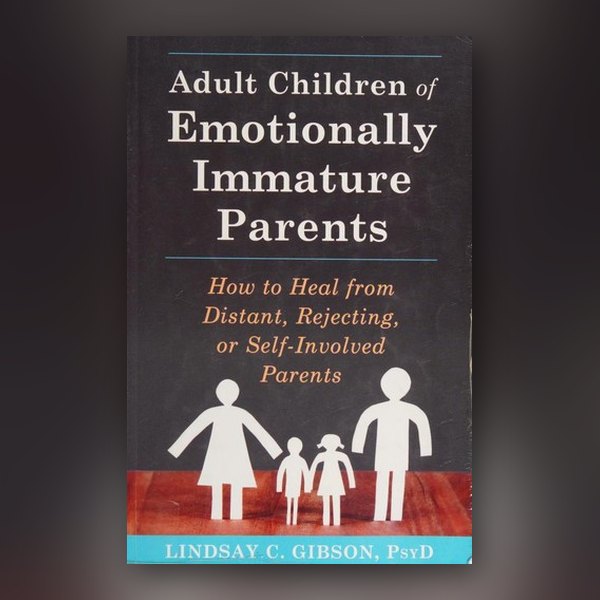
Episode-by-episode discussion of Adult Children of Emotionally Immature Parents by Lindsay C. Gibson — the four kinds of emotionally immature parent, and how to stop managing them as an adult. Each episode takes one chapter and turns it into something you can use today. Part of Booktok Podcasts.
One chapter per episode, in the book's own order. Each episode stands on its own.
We open with the feeling Gibson built the book around: emotional loneliness inside a family that looked fine from the outside. We unpack why a parent can be present, providing and still emotionally unavailable.
Gibson sets out what emotional immaturity actually looks like — rigidity, low tolerance for stress, a self that cannot hold someone else's feelings alongside its own. We go through the traits, and draw the line between a parent with a lasting pattern and one having a hard year.
This is the chapter readers recognise themselves in hardest. We cover the specific moves that make these relationships exhausting: the demand to be mirrored, the refusal to repair, the anger that arrives whenever you say something true, and the way feelings get transmitted instead of discussed.
Gibson sorts emotionally immature parents into four types — emotional, driven, passive and rejecting — and the passive one surprises people most, because they are often the parent you liked. We walk through all four and what each does to a child's sense of what to expect from other people.
Children respond to the same parent in opposite ways. We unpack Gibson's split between internalisers who turn inward and take on the work, and externalisers who push outward and expect rescue, plus the healing fantasy underneath both and the role-self built to keep it alive.
If you picked this book up, Gibson thinks you are probably an internaliser. This episode is a portrait of that person: perceptive, over-responsible, apologetic about needing anything, and doing most of the emotional work in every relationship they have — usually without noticing.
The chapter about what happens when the performance stops working, which Gibson argues is not a breakdown but an opening. We cover her idea of the true self, what waking up to your own anger and your own values actually feels like, and why it often arrives disguised as a crisis.
Gibson's most practical chapter, built around giving up the fantasy that the parent will change. We go through detached observation and her maturity awareness approach — stating what you need, managing the interaction instead of the relationship, stepping out of the old role mid-conversation.
What changes once the role and the healing fantasy are set down. We work through the freedoms Gibson describes, including the ones people feel guiltiest about: setting limits on what you give, suspending contact, and no longer needing anything from a parent in order to be all right.
The finale. Having spent a book on emotional immaturity, Gibson closes by describing its opposite so you can recognise it — realistic, reliable, respectful, responsive — and we pull the whole series together around her point that old patterns feel like chemistry long before they feel like a warning.
We discuss it chapter by chapter, but nothing replaces reading it. This is an Amazon affiliate link — it costs you nothing extra and it helps pay for the show.
10 episodes in this show, 1,100+ across the whole network, and a new one every day.
More chapter-by-chapter shows: Good Inside · The Anxious Generation
Educational commentary and review only — not affiliated with, endorsed by or sponsored by Lindsay C. Gibson or the publisher. All discussion is transformative and used under Fair Use. No copyright infringement intended. As an Amazon Associate we earn from qualifying purchases.