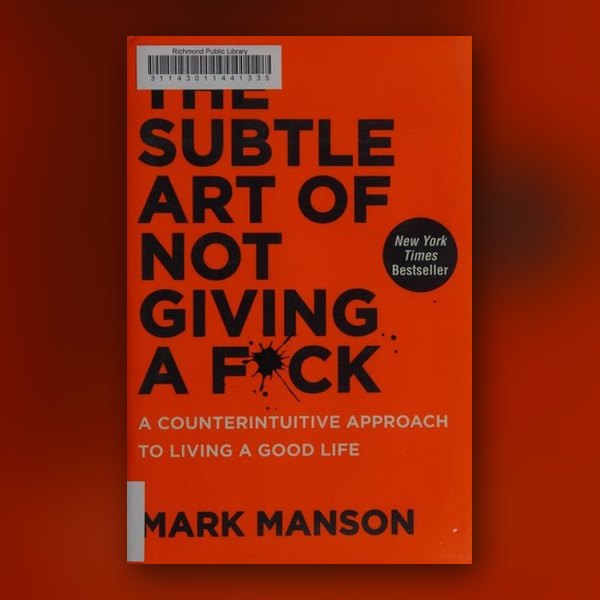
Episode-by-episode discussion of The Subtle Art of Not Giving a F*ck by Mark Manson — choosing your struggles, facing limits, and letting go of the rest. Each episode takes one chapter and turns it into something you can use today. Part of The Burnout Podcasts.
One chapter per episode, in the book's own order. Each episode stands on its own.
You feel anxious, then you feel anxious about feeling anxious, and the whole thing spirals. Manson opens with that loop and with the counterintuitive claim underneath this entire book: the desire for a better experience is itself a negative experience, and wanting more is the thing keeping you stuck. We lay out what he actually means by not giving a f*ck — not indifference, but being comfortable with being different.
Happiness is not a destination you arrive at once the problems stop; it comes from solving problems, which means the goal is better problems rather than no problems. Manson walks through the Disappointment Panda, why emotions are feedback and not instructions, and the question that actually shapes your life: what pain are you willing to sustain? We get practical about choosing your struggle on purpose.
The chapter that made this book famous. Manson argues that the entitlement running through modern self-help — you are extraordinary, you deserve more — produces people who are miserable precisely because they expect to be exceptional. We work through the tyranny of exceptionalism, why accepting an unremarkable existence is freeing rather than defeating, and what is left to aim at once you drop the fantasy.
Suffering is not the enemy; suffering for nothing is. Manson introduces the self-awareness onion — emotions, then why you feel them, then the values underneath — and uses it to separate good values from bad ones. We go through his test: good values are reality-based, constructive, and within your control, while pleasure, material success and always being right fail on all three counts.
The distinction this chapter turns on is between fault and responsibility. You are not at fault for everything that happened to you, and you are still responsible for what you do next — Manson is blunt that these are different questions and that conflating them keeps people stuck. We cover responding to genuine tragedy, the pull of victimhood as an identity, and why there is no "how" beyond choosing.
We are all wrong about something, constantly, and the people who cause the most damage are the ones most sure they are not. Manson lays out how unreliable memory and belief really are, Manson's Law of Avoidance, and the ego-death thought experiment he provocatively titles after self-destruction. We take it as he means it — letting an identity die, not a person — and end on how to be a little less certain of yourself.
Improvement at anything is built on thousands of small failures, so the size of your success is measured by how much discomfort you can tolerate on the way. Manson breaks the usual order of motivation: action comes first, inspiration follows, not the reverse. We get into the Do Something Principle and why waiting to feel ready is the most reliable way never to start.
A life of unlimited options is a life of no commitment, and Manson argues that rejecting things — people, beliefs, opportunities — is what gives the rest meaning. We cover honest boundaries versus the blame-and-rescue dynamic, how trust is built and rebuilt after it breaks, and the paradox at the centre: freedom comes through commitment, not through keeping every door open.
The book ends where Manson's own thinking began — with the death of his friend Josh, and with the realisation that confronting mortality is what strips away the trivial. We work through the idea that we chase legacy and status to feel permanent, and why accepting that you will die is the thing that finally makes it clear which problems are worth having. The quiet, serious close to a loud book.
We discuss it chapter by chapter, but nothing replaces reading it. This is an Amazon affiliate link — it costs you nothing extra and it helps pay for the show.
9 episodes in this show, 1,100+ across the whole network, and a new one every day.
More chapter-by-chapter shows: Set Boundaries, Find Peace · The Let Them Theory · Drama Free · Why Men Love Bitches
Educational commentary and review only — not affiliated with, endorsed by or sponsored by Mark Manson or the publisher. All discussion is transformative and used under Fair Use. No copyright infringement intended. As an Amazon Associate we earn from qualifying purchases.