Episode-by-episode discussion of ADHD 2.0 by Edward Hallowell and John Ratey — what the ADHD brain actually does, and the strengths that come with the wiring. Each episode takes one chapter and turns it into something you can use today. Part of Burnout Books to Podcasts.
One chapter per episode, in the book's own order. Each episode stands on its own.
In 1994 Hallowell and Ratey published Driven to Distraction and introduced a syndrome most people had never heard of. Both authors have it themselves, which is why they could describe it from the inside out. This opening episode is about everything that has been learned since — and about the stakes, which they refuse to soften. Untreated, this condition drives people towards addiction, criminal records (the prisons, they note, are full of undiagnosed ADHD), dangerous behaviour, and a measurably shorter life; they quote Russell Barkley, one of the field's top authorities, on exactly how stark the danger is. And then the other half of the argument: if you know who you are, it gets easier to like who you are.
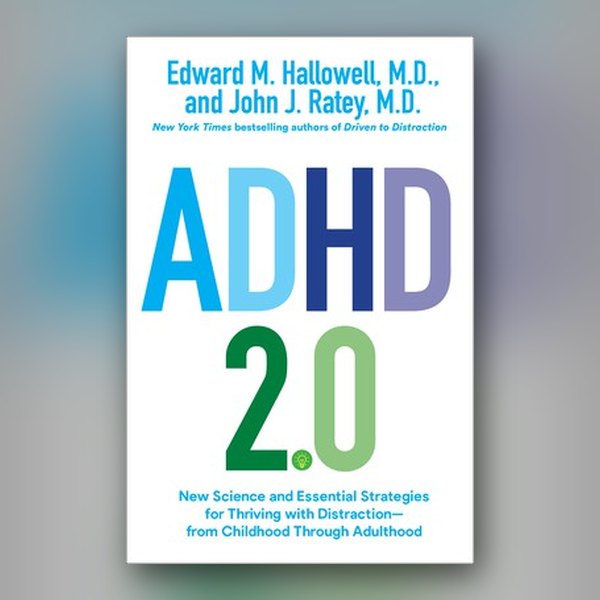
Who are the people who have this? The kid who drives his parents mad by being completely disorganised, unable to finish anything, incapable of cleaning a room or washing up — and also the adult nobody ever diagnosed. This episode makes the book's central move: rebranding the condition as VAST, variable attention stimulus trait, because it is a trait on a spectrum rather than a disorder you either have or don't. It covers the pairs of opposite symptoms that define it, and the one most people have never had named for them — rejection sensitive dysphoria, where a mild dismissal or vaguely negative remark sends someone to the depths in the blink of an eye. Walter Mischel's 1972 marshmallow experiment makes an appearance too.
Meet Hank — a natural salesman, good with people, a sharp judge of character, and tortured by his own mind for hours at a stretch. This episode explains the mechanism behind that, and it is the most genuinely useful neuroscience in the book: the Default Mode Network, which runs when you are not focused on a task, and the Task Positive Network, which runs when you are. In most brains the switch between them is smooth. In an ADHD brain it is glitchy — and when the DMN hijacks consciousness it stops producing lovely images and becomes the Demon, serving up rumination, shame and self-attack. The prescription is simple to say and hard to do: don't feed the Demon, deny it your attention, get into action.
The cerebellum used to be filed away as the part of the brain that handles balance and coordination. It is now understood to do far more, and this chapter makes the case that the vestibulocerebellar system is much more in play in ADHD than anyone previously thought. Hallowell and Ratey are careful here in a way the internet is not — they report the mounting evidence, flag what they have and have not seen for themselves, and disclose their own connection to Frank Belgau's work on balance-based training. The episode includes a case history of Dr. Hallowell using VCS stimulation in an unusual consultation, and an honest note on the MRI findings: a real, significant difference in aggregate, but nowhere near big enough to be a diagnostic test.
In 1985 Dr. Vincent Felitti was running an obesity clinic at Kaiser Permanente in San Diego, getting good results, and kept seeing something he could not explain — the thread that became the Adverse Childhood Experiences research. This episode is about what that work implies for ADHD, and the authors' claim that connection is the most powerful treatment they have, ahead of anything in a prescription pad. It includes a first-person account of being six years old, unable to read "See Spot run" because of undiagnosed dyslexia, and being called slow — which in that era meant stupid. The conclusion is blunt: not the school, not the IQ score. One teacher, coach or family friend who understands them changes everything.
People with ADHD and VAST are usually creative and original, thinking along unusual lines with a persistent drive to build or make something — a business, a boat, a book. The problem is almost never capability. It is aiming that drive at work of the right shape and the right difficulty: too easy and the brain switches off, too hard and it shuts down. This episode is about finding your "right difficult," and it goes practical with the Kolbe test, developed by Kathy Kolbe — who grew up around test development; her father created the Wonderlic — which measures how you instinctively take action rather than how clever you are. Identifying the talent is this chapter. Growing it is the next one.
From the moment ADHD was first described, people have asked how much of it is the environment — and Dr. Charles Bradley was asking that question at the very beginning. This episode is the practical environmental audit: how to build surroundings that work with this kind of brain instead of against it, at home, at school and at work. It covers sleep, structure, stimulation and the honest version of the sugar question — sugar prompts a release of dopamine, the ADHD brain loves that squirt, you feel energised and satisfied, and then you need more to stay there, which is the whole trap. The authors also disclose their own commercial relationships in the footnotes, which is more than most books in this space do.
Big paper due? Presentation to give? Test to study for? Run round the block first. This episode makes the case that exercise is the single most underused intervention for ADHD — not as general wellness advice but as something that measurably changes attention and motivation in the window right after you do it. Hallowell and Ratey go through what kinds of movement work and why, including the global picture: Tatsuo Okada's work in Japan using exercise and play with people who have ADHD, autism and other brain differences. The closing advice is the realistic kind — most people with this brain will not sustain a solo routine, so build in a person. Walk after dinner with your partner, your friend or your kid.
"Do you believe in Ritalin?" is the first question these doctors get, and they know what is actually being asked. This episode is the level-headed conversation about medication that is almost impossible to find online: what the drugs do, what they don't do, what the real risks are versus the feared ones, and how to tell whether a dose is working. The authors go into the practical details that change outcomes — including the 2006 finding that satisfaction runs around 40 to 50 percent on short-acting medication but rises to about 70 percent on long-acting versions, partly for the obvious reason that people with ADHD struggle to remember pills several times a day. It is the longest chapter in the book, and it earns the length.
Race car brain with bicycle brakes — whichever name you have settled on, this closing episode assembles everything into one plan: connection, the right difficult, the right environment, movement, and medication where it helps. Its best idea is also its most counterintuitive, borrowed from an athlete named Chris, and it amounts to deliberately not caring whether the ball drops in the hole. It is not indifference; it is putting your focus on the moment instead of the outcome, which is the one state in which this kind of brain performs. We close with the diagnostic criteria themselves, including the detail most adults never hear: from age 17 you need five symptoms rather than six, and in adults hyperactivity often shows up as restlessness.
We discuss it chapter by chapter, but nothing replaces reading it. This is an Amazon affiliate link — it costs you nothing extra and it helps pay for the show.
10 episodes in this show, 1,100+ across the whole network, and a new one every day.
More chapter-by-chapter shows: Atomic Habits · The Power of Habit · Deep Work · Stolen Focus · Dopamine Nation · Dopamine Detox
Educational commentary and review only — not affiliated with, endorsed by or sponsored by Edward M. Hallowell or the publisher. All discussion is transformative and used under Fair Use. No copyright infringement intended. As an Amazon Associate we earn from qualifying purchases.